Plants on Homestead
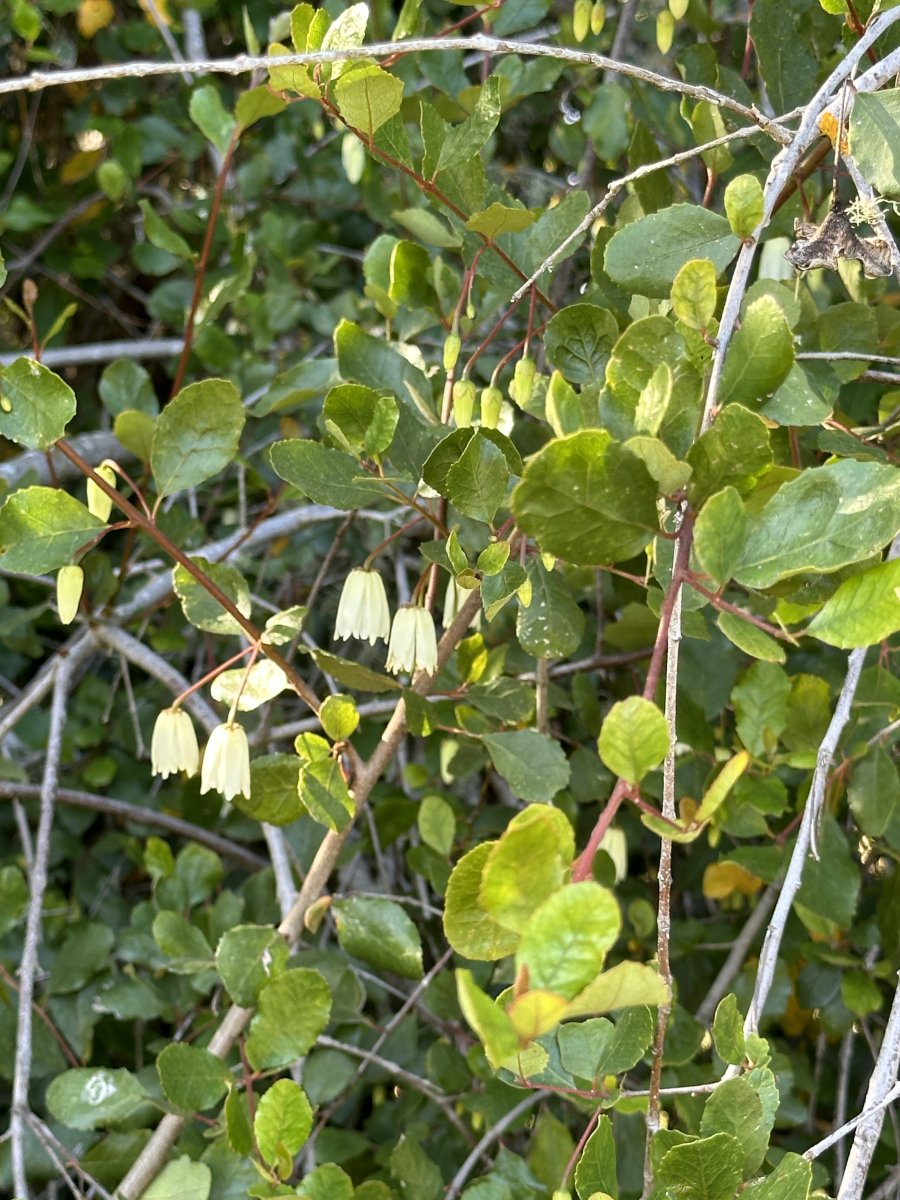
Lily of the Valley Tree
Crinodendron patagua
This tree is in the middle of the outer garden and looks pretty unique. It's the only one I can find on the croft.
Uses:
Fun story: According to Chilean folklore, patagua trees originate from women who repented their sins before God. Instead of obliteration, they were transformed into trees, unlike "just" people. This transformation explains the pataguas' resemblance to human figures and why some Indigenous people would fall in love with them. Folklore also suggests that pataguas may signal the presence of buried treasure (entierro).
Type: Evergreen tree
Other names: Patuga
Uses:
- Honey production.
- Tannin contained in bark is used for tanning leather.
- Wood is used in furniture.
- Reforestation
Fun story: According to Chilean folklore, patagua trees originate from women who repented their sins before God. Instead of obliteration, they were transformed into trees, unlike "just" people. This transformation explains the pataguas' resemblance to human figures and why some Indigenous people would fall in love with them. Folklore also suggests that pataguas may signal the presence of buried treasure (entierro).
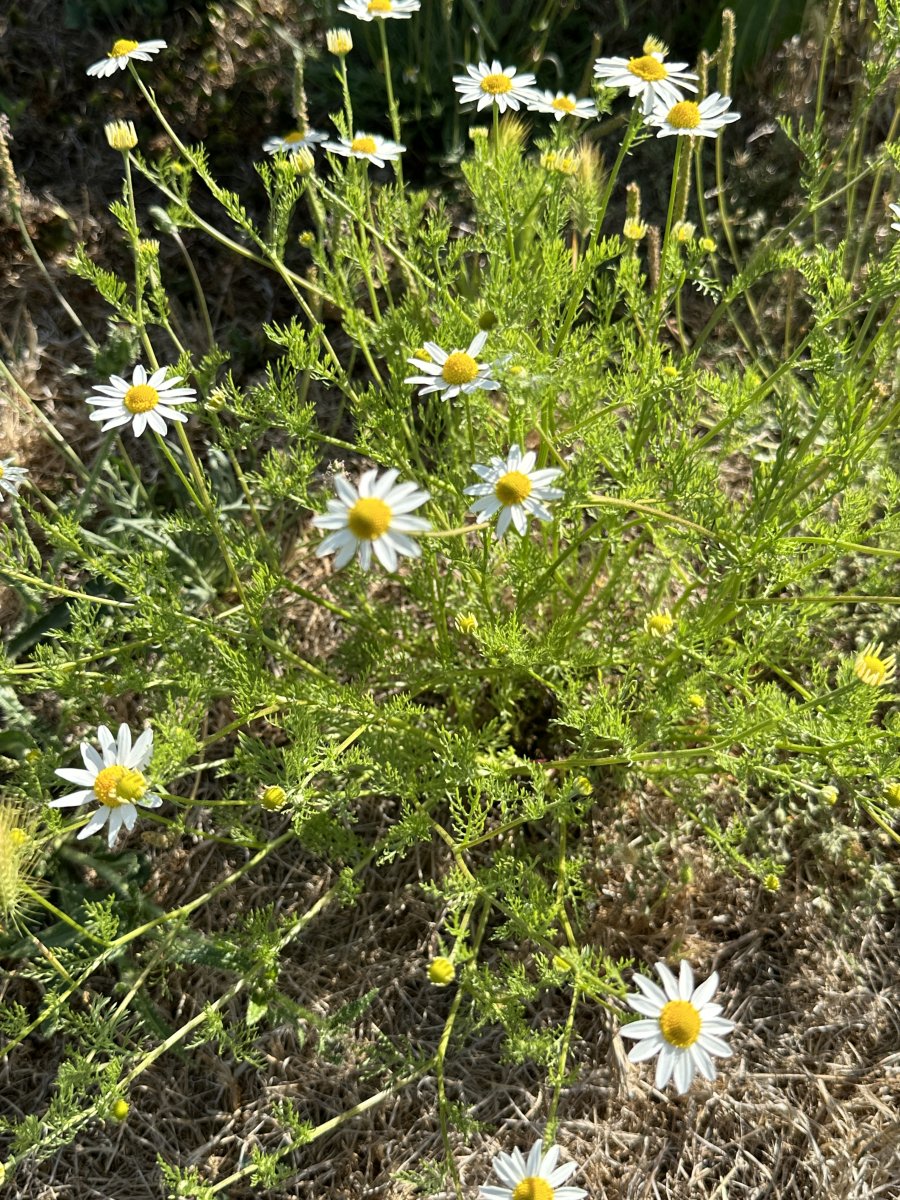
Stinking Chamomile
Anthemis cotula
This guy is growing all over the croft. It really stinks too! So beautiful things can smell bad. Hmmm.
Type: Annual weed
Poisonous? Potentially toxic to dogs, cats, horses, and guinea pigs.
No way! It was Johnny Appleseed who spread this all over the country. He thought it stopped malaria. Because of this, Johnny Appleseed, was called "one of the worst grievances of the Ohio farmers".
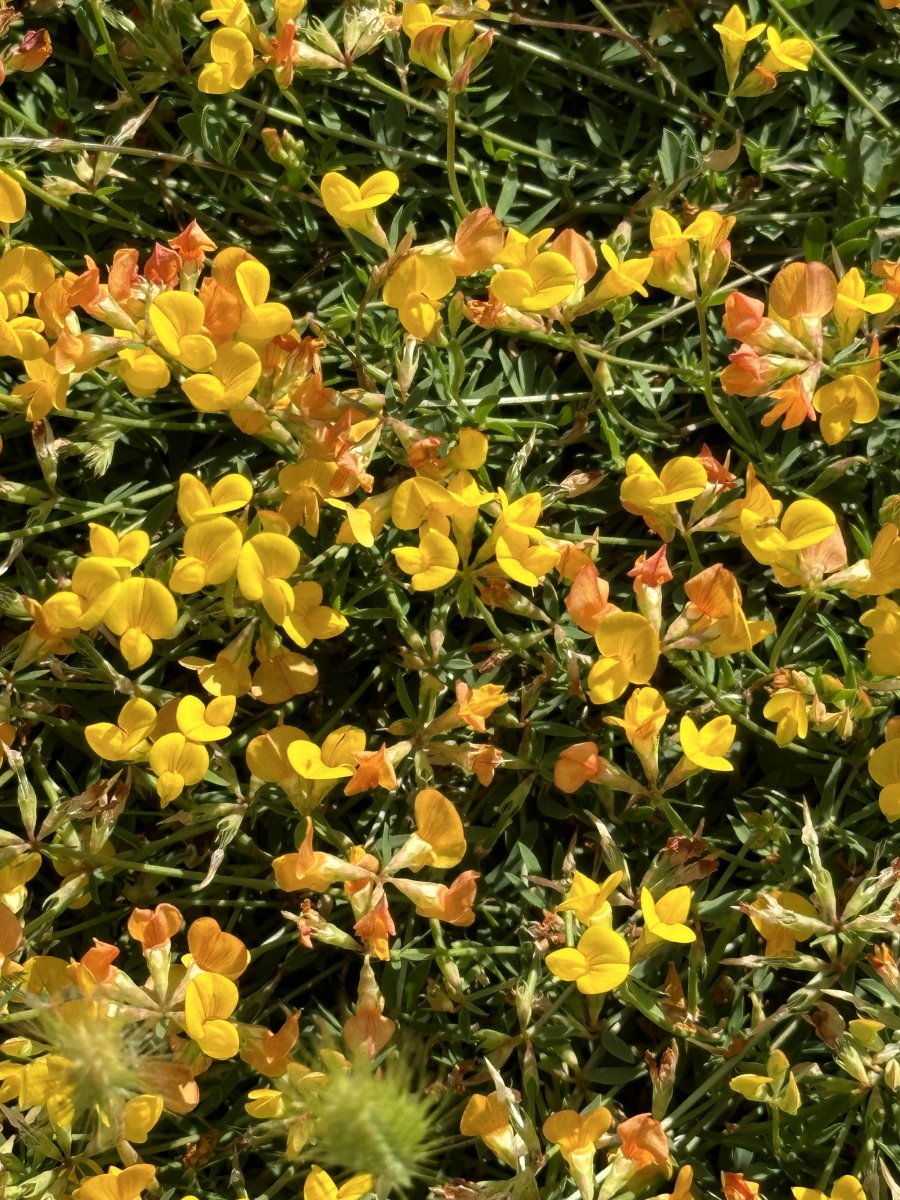
Bird's Foot Trefoil
Lotus corniculatus
This lovely yellow flower grows very low and is all over the roadsides and in the croft. It isr eally beautiful. Not sure why they call it a weed. Apparently, it's invasive.
Type: Perennial weed, in the pea family!
Other names: Common Bird's-foot trefoil, eggs and bacon, and birdsfoot deervetch.
Uses:
- In agriculture as a forage plant, grown for pasture, hay, and silage. It is a high quality forage that does not cause bloat in ruminants.
- An alternative to alfalfa in poor soils.
- As a component of wildflower mixes in Europe.
- Prevents soil erosion and provides a good habitat for wildlife.
Poisonous? Bird's-foot trefoil contains cyanogenic glycosides, which release small amounts of hydrogen cyanide when macerated. This is not normally poisonous to humans, though, as the dose is very low.
Condensed tannins are also present.
Fun Fact: In the traditional medicine of the Sannio region of Italy, diluted infusions of Bird's Foot were used for anxiety, insomnia, and exhaustion.
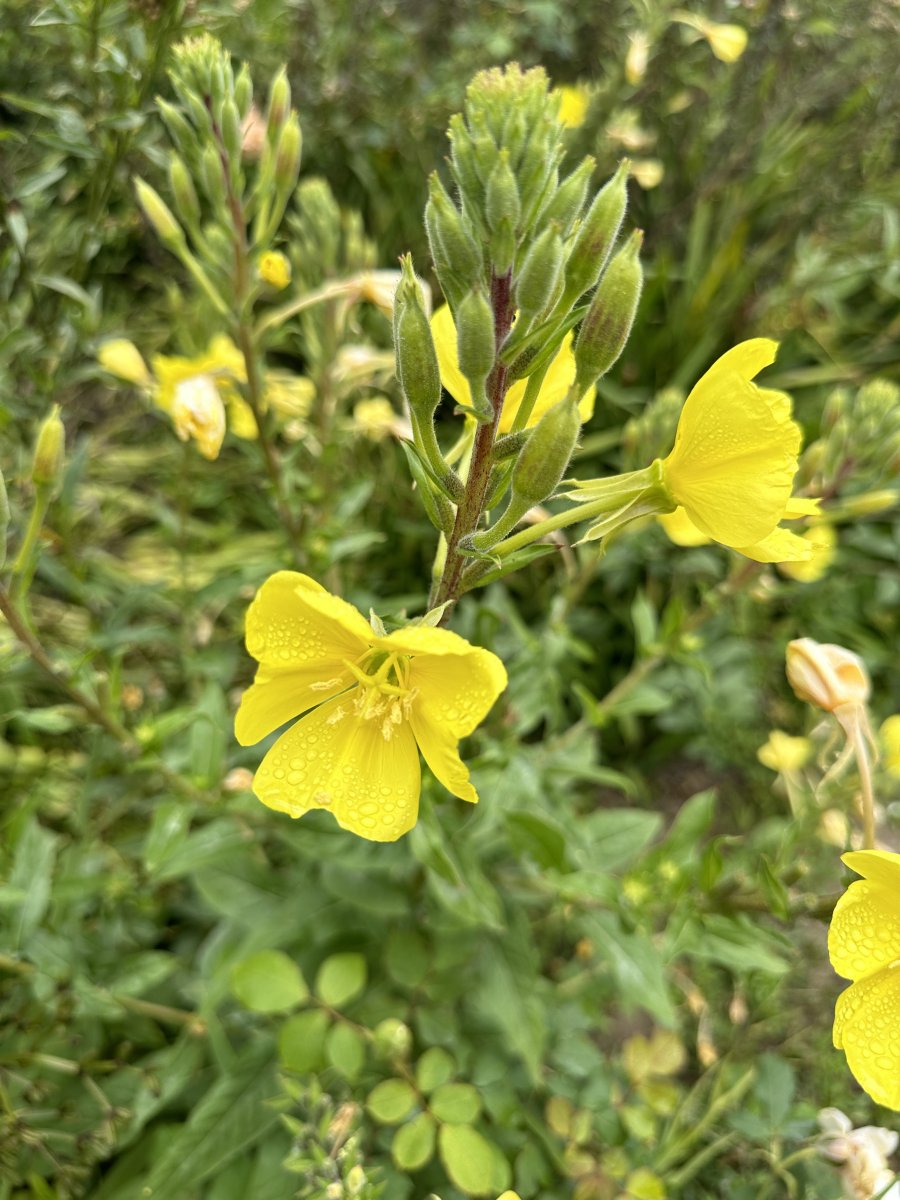
Common Evening Primrose
Oenothera biennis
A lovely flower in and amongst the roses. The flower opens so quickly in the evening you can watch it open.
Type: Biennial wildflower. So 'biennial' means it lasts two years. It isn't the usual annual (lasts one year), or a perennial (lasts forever).
Other names: Evening Star, sundrop, hog weed, weedy evening primrose, German rampion, King's cure-all, and fever-plant.
Uses: This is where you get 'Evening Primrose Oil
Strange but true: The Evening Primrose has a genetic connection to Charles Darwin. The plant played a significant role in the development of the theory of evolution. So, this humble flower has been pivotal in unraveling the mysteries of life's diversity.
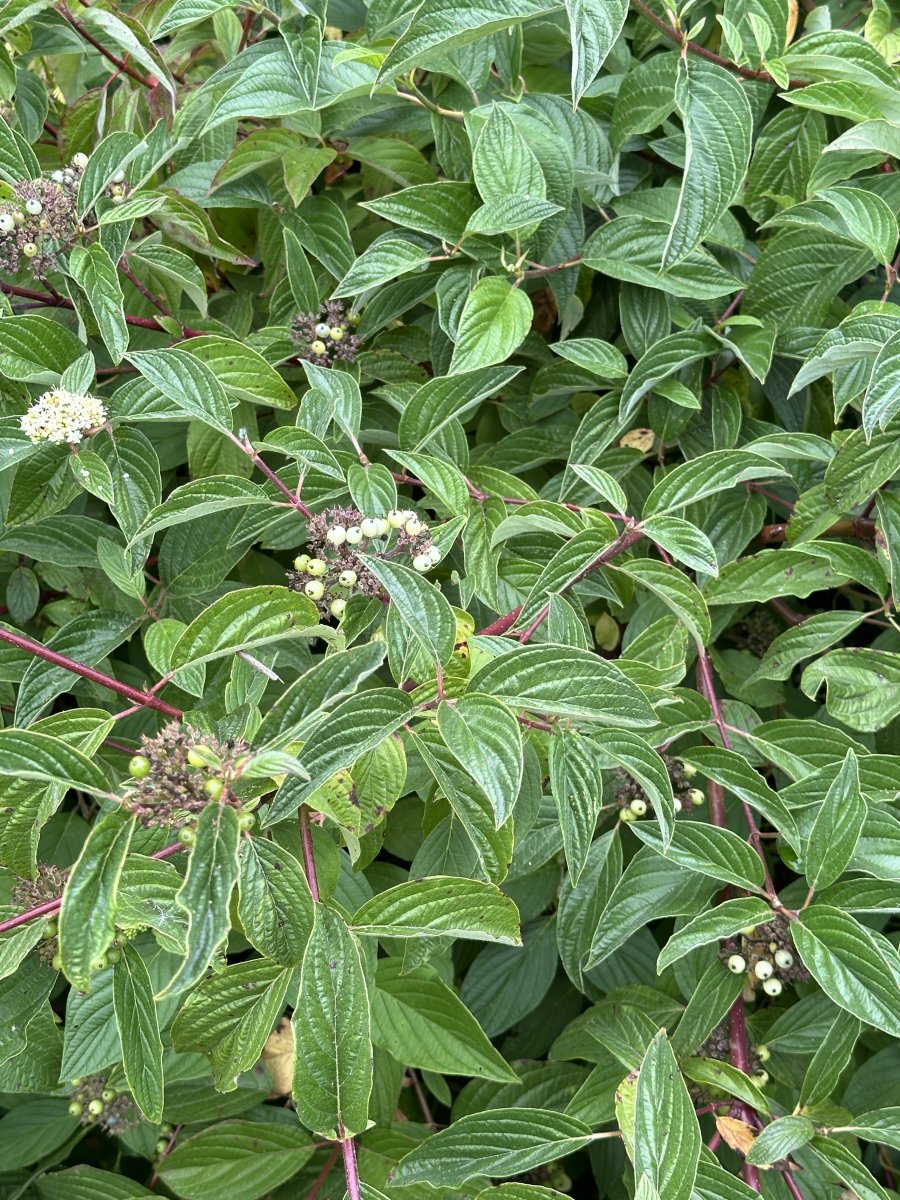
Red Osier Dogwood
Cornus sericea
We have lots of dogwod on the croft. Come to find out, some are shrubs, and some are trees. The Red Osier is a shrub.
Type: Deciduous shrub, native to our coast.
Holiday Plant: During the holidays, the leafless bright red branches of the Osier Dogwood looks quite holiday-festive.
Fun fact: Indigenous peoples, specifically the Salish, the Ojibwe (Chippewa), the Cree, and the Lakota Sioux. used the inner bark of the red osier dogwood for medicinal purposes and in ceremonial smoking mixtures.
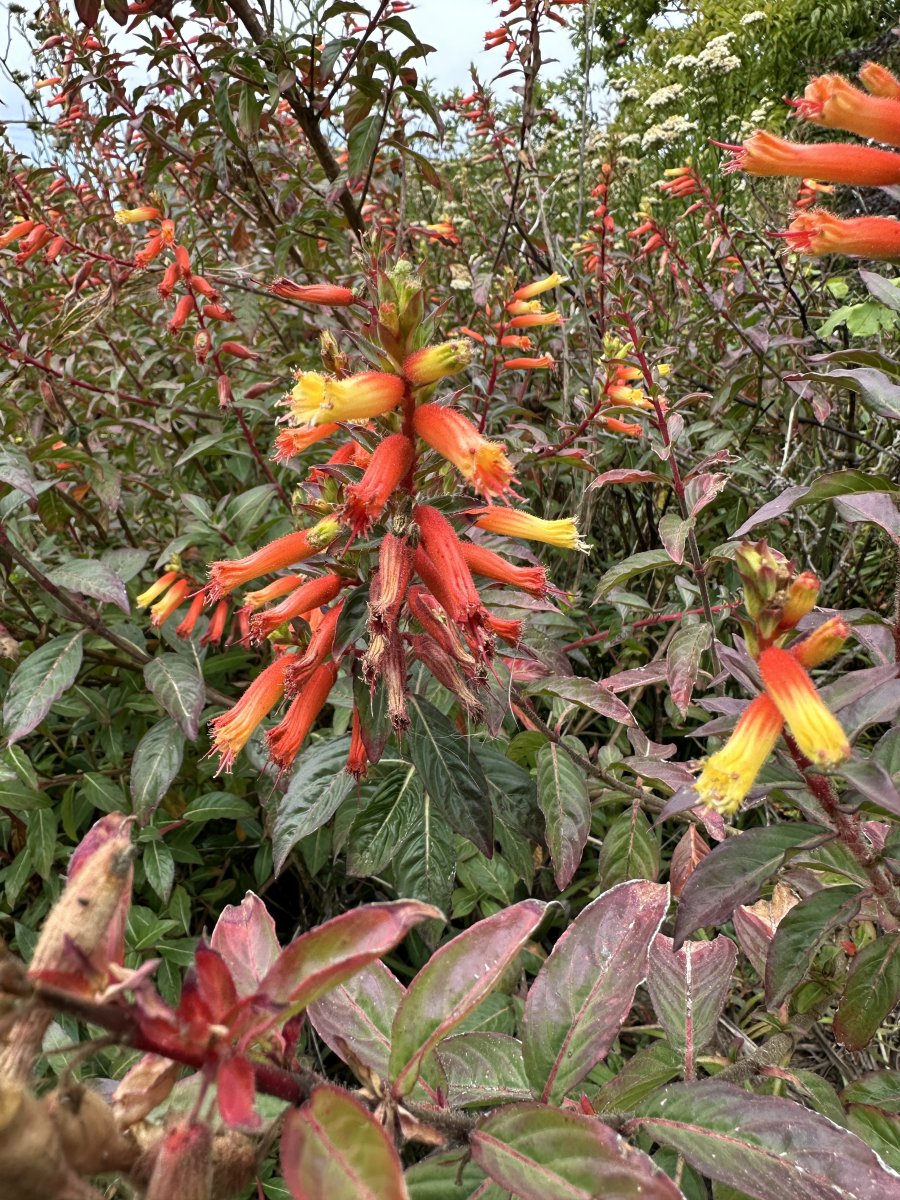
Bird's Foot Trefoil
Lotus corniculatus
This lovely yellow flower grows very low and is all over the roadsides and in the croft. It is really beautiful. Not sure why they call it a weed. Apparently, it's invasive.
Type: Perennial weed, in the pea family!
Other names: Common Bird's-foot trefoil, eggs and bacon, and birdsfoot deervetch.
Uses:
- In agriculture as a forage plant, grown for pasture, hay, and silage. It is a high quality forage that does not cause bloat in ruminants.
- An alternative to alfalfa in poor soils.
- As a component of wildflower mixes in Europe.
- Prevents soil erosion and provides a good habitat for wildlife.
Poisonous? Bird's-foot trefoil contains cyanogenic glycosides, which release small amounts of hydrogen cyanide when macerated. This is not normally poisonous to humans, though, as the dose is very low.
Condensed tannins are also present.
Fun Fact: In the traditional medicine of the Sannio region of Italy, diluted infusions of Bird's Foot were used for anxiety, insomnia, and exhaustion.
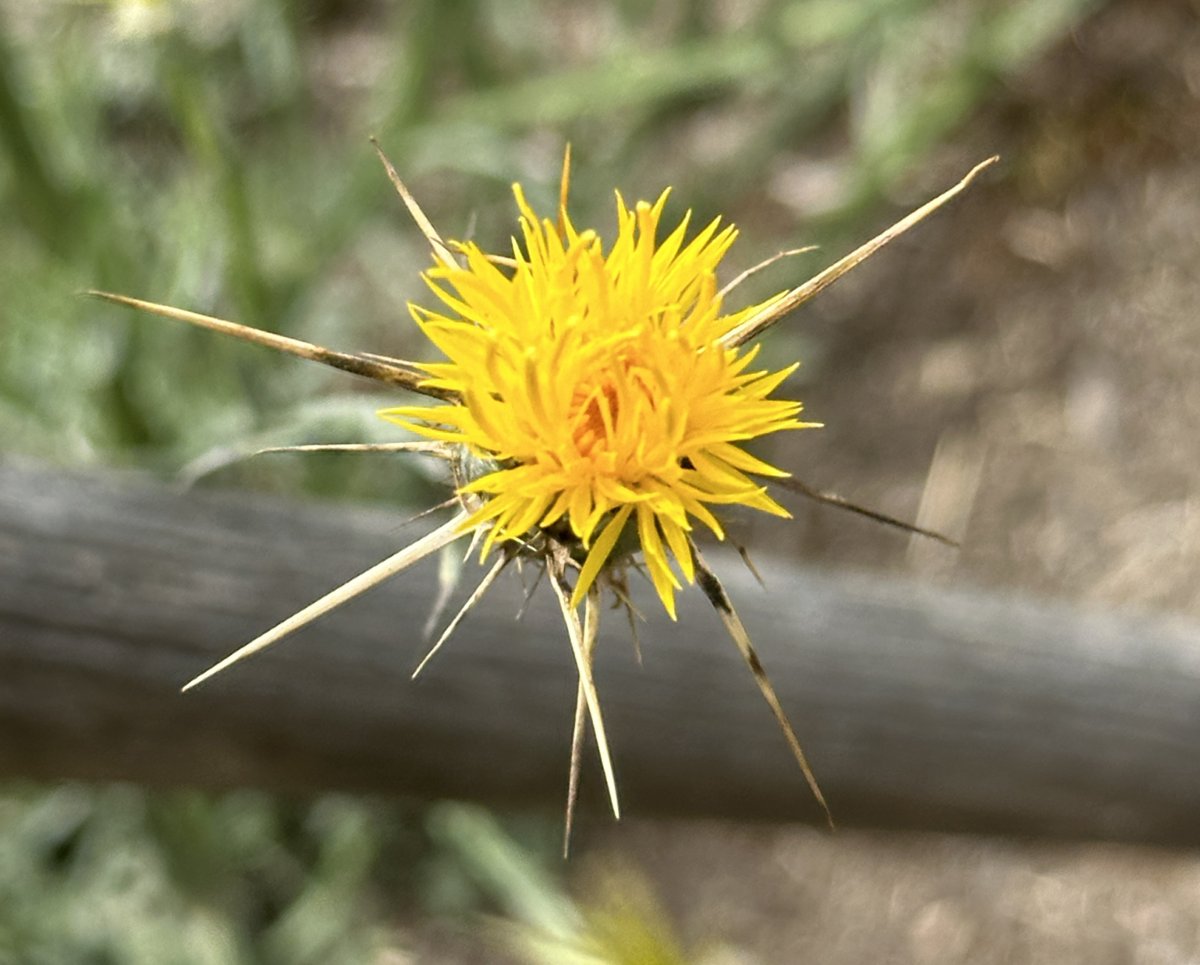
Yellow Star Thistle
Centaurea solstitialis
This beautiful but spiky thistle has been called noxious by many. Bees love the flowers, and goats will happily eat it even with spines. But it is poisonous to horses. They won't eat it, but if it is all that is growing, then they will.
Type: A winter annual, considered an invasive weed.
Other names: Golden starthistle, yellow cockspur, and St. Barnaby's thistle.
Poisonous outcome: It causes one of the most interesting named diseases if eaten -- namely nigropallidal leukoencephalo-malacia. The name alone tells you what it does -- softening (malacia) of the white (leuko) matter of the brain (encephalo), specifically in the substantia nigra and the globus pallidus. Once poisoned, horses lose the ability to control their lips! So basically, permanent lip paralysis. Some call it Equine Toxic Parkinsonism.
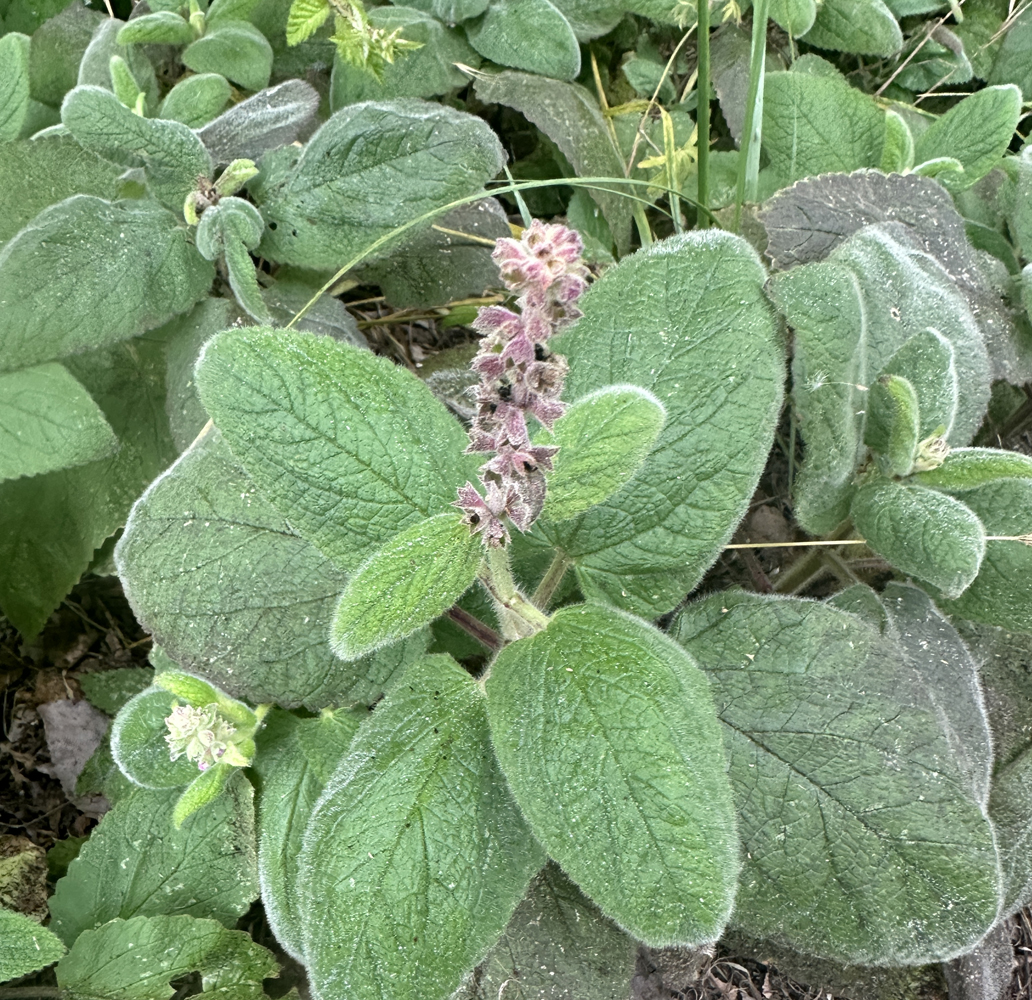
California Hedgenettle
Stachys bullata
Our California hedgenettle grows in shady overgrown areas on the croft. Hedgenettles are in the mint family. You can tell because it has square stems.
The cool thing is that it is native to the Central California coast. Finally, not an invader!
Type: A flowering perennial herb.
Yep indeed: The leaves are edible and used for teas. But by who?
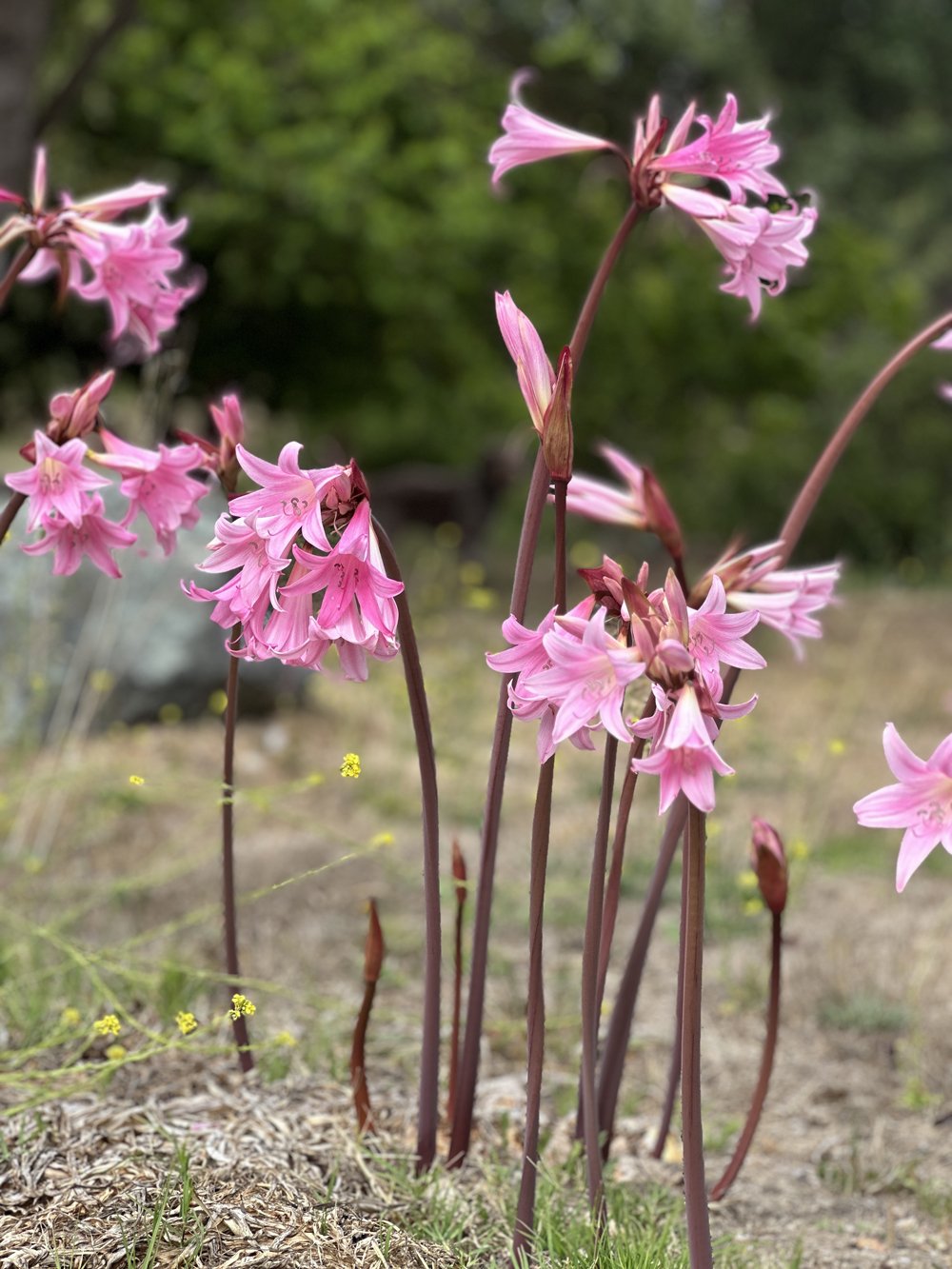
Jersey Lily
Amaryllis belladonna
This just grows wild on the croft! These are not the same as the "amaryllis" you get at Christmas, which are not true amaryllis but rather Hippeastrums. This guy is native to South Africa!
Bella Donna means Beautiful Lady in Italian.
Other names: Naked Lady Lily, March Lily, or simply Belladonna Lily.
Why "naked"? No leaves when it blooms.
Type: Perennial bulb
Poison: All parts of this plant contain toxic alkaloids, causing vomiting and diarrhea in humans. But the same alkaloids in the bulbs have properties that can fight malaria caused by Plasmodium falciparum.
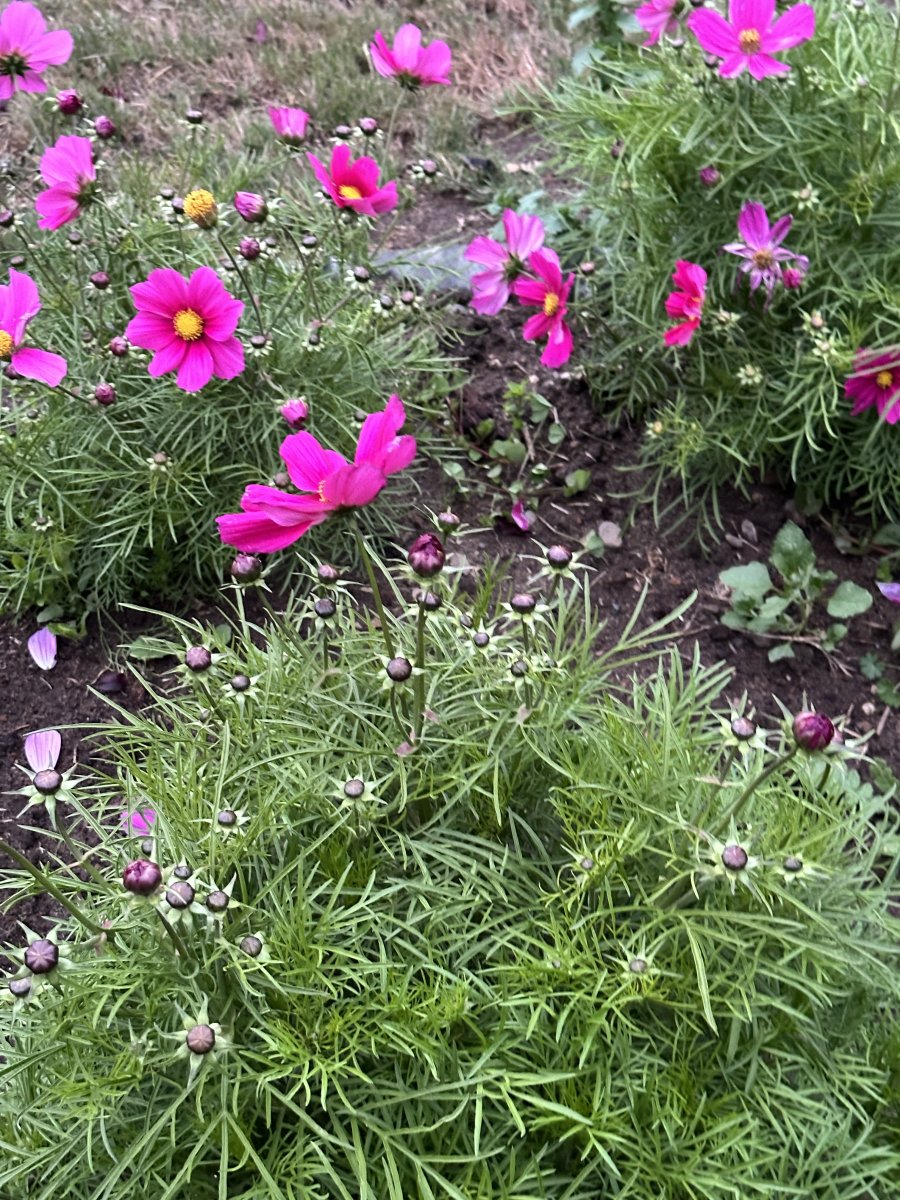
Garden Cosmos
Cosmos bipinnatus
These we planted only three weeks ago, and boom. They are showing lots of buds and color.
Type: This particular variety of cosmos is an annual, but self-sewing, so it will come back next year.
Other names: Mexican aster or cosmea.
It's a native of Mexico, Costa Rica and Guatemala. We can collect the seeds from the dried heads so we don't have to buy more next year.
Garden Cosmos are known to be overachievers (more flowers than you expect), late to the party (flowers come later in the season), and bendy dancers (thin stems sway easily in the wind).
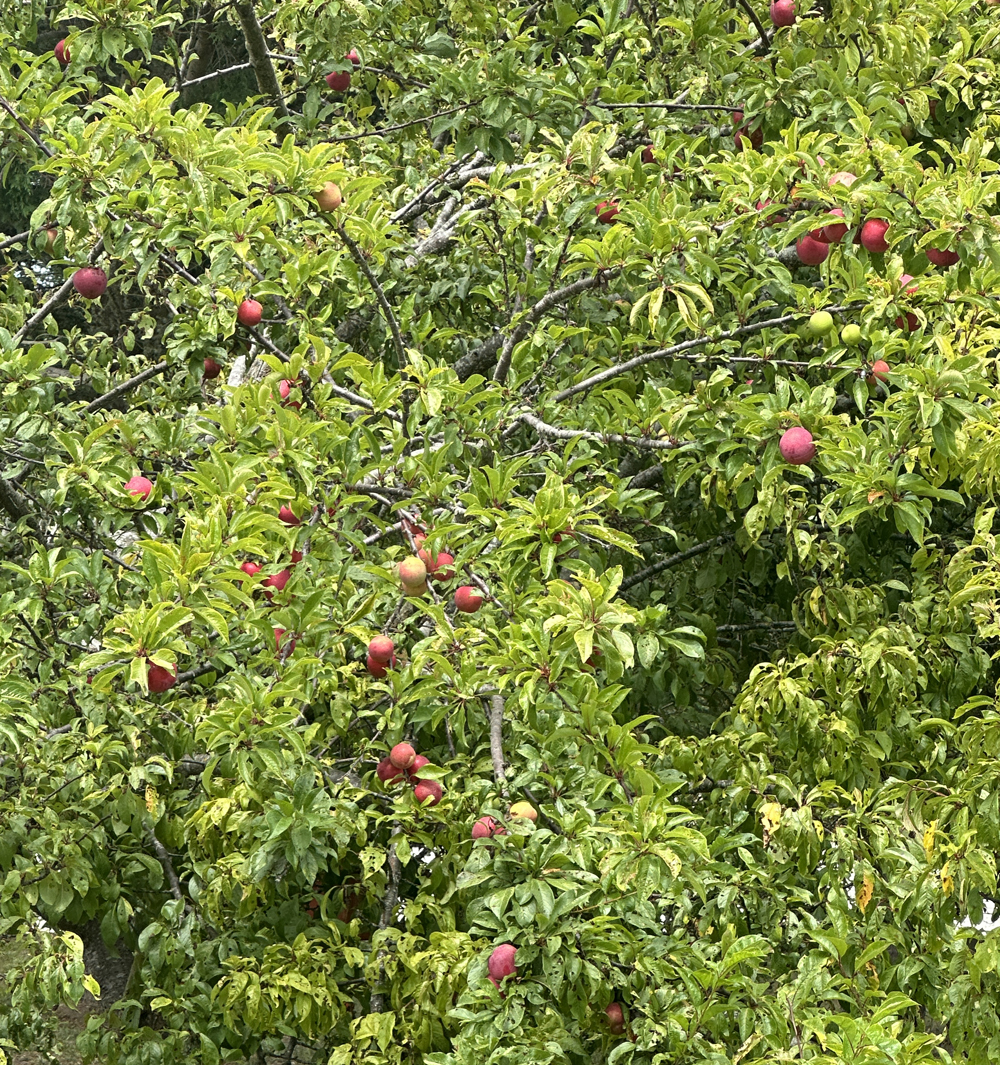
Pluot Tree, in August
Prunus salicina (Japanese plum) x Prunus armeniaca (apricot)
What's a pluot? It's a cross between a Japanese plum and an apricot. We can all thank Luther Burbank who single-handedly created an entire industry by crossing plum varieties. All plums we eat today originated with his work in the 19th century.
Type: Deciduous tree
You can tell it isn't a typical plum because the leaves are green. Most plum trees have purple leaves, but Japanese plum trees and apricots have green leaves.
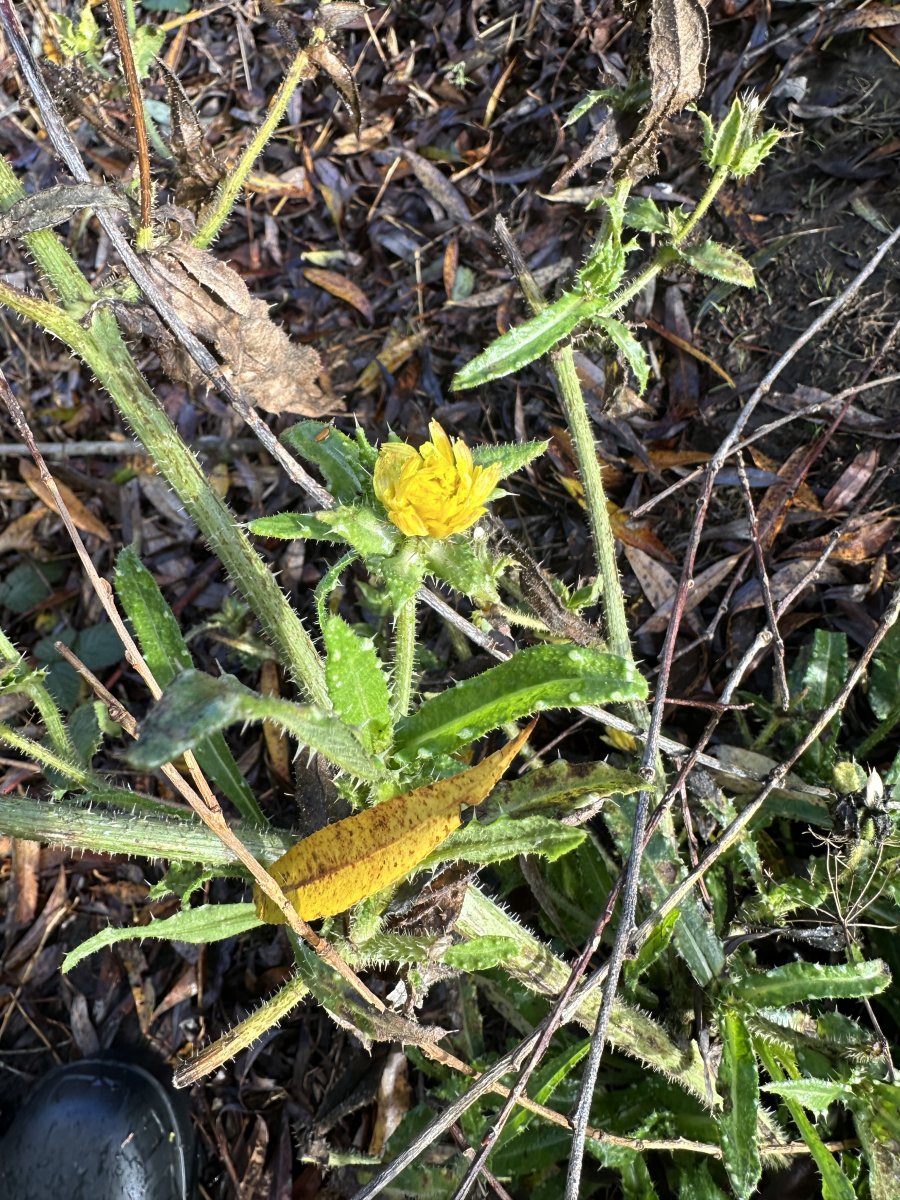
Bristly Oxtongue
Helminthotheca echiodes
Again, many consider this a weed. Do we? Probably. The leaves are as rough as a cow's tongue, and the yellow flower matures into little white seed tufts later in the season, sort of like Dandelions. Bees love it and I respect that it grows in the worst possible soils - along roads and in droughts. Respect! And oxtongue helps with vocabulary, introducing the word 'ruderal', as in the oxtongue is a ruderal plant -- a plant species that is first to colonize disturbed lands.
Type: A flowering annual or biennial weed.
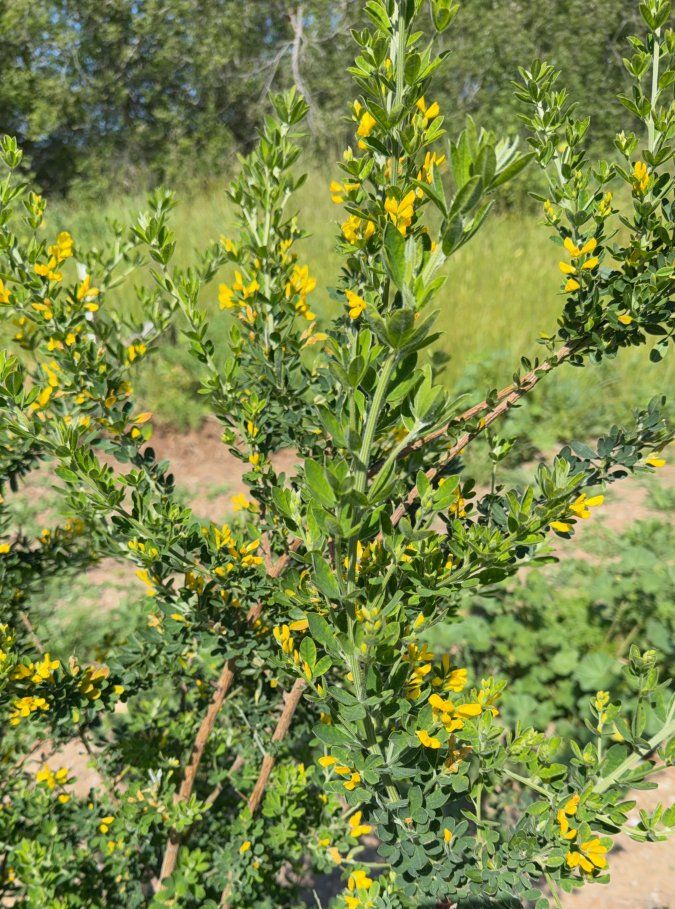
French Broom
Spartium junceum
This is a pretty tall plant that is growing out in the open near our field. It just may be the most unique non-native weed on the farm.
Fun Fact #1: They photosynthesize through their stem! That's unique.
Fun Fact #2: It has a lovely sweet vanilla smell, but only up close, not from far away.
Fun Fact #3: It is full of oil and massively flammable.
Fun Fact #4: It has a long history of helping humans - as fiber, as a fragrance in perfumes, and as an ornamental in drought-tolerant environments.

Place Holder
Soon, a new plant will be here.
Place Holder
Soon, a new plant will be here.